
Introduction
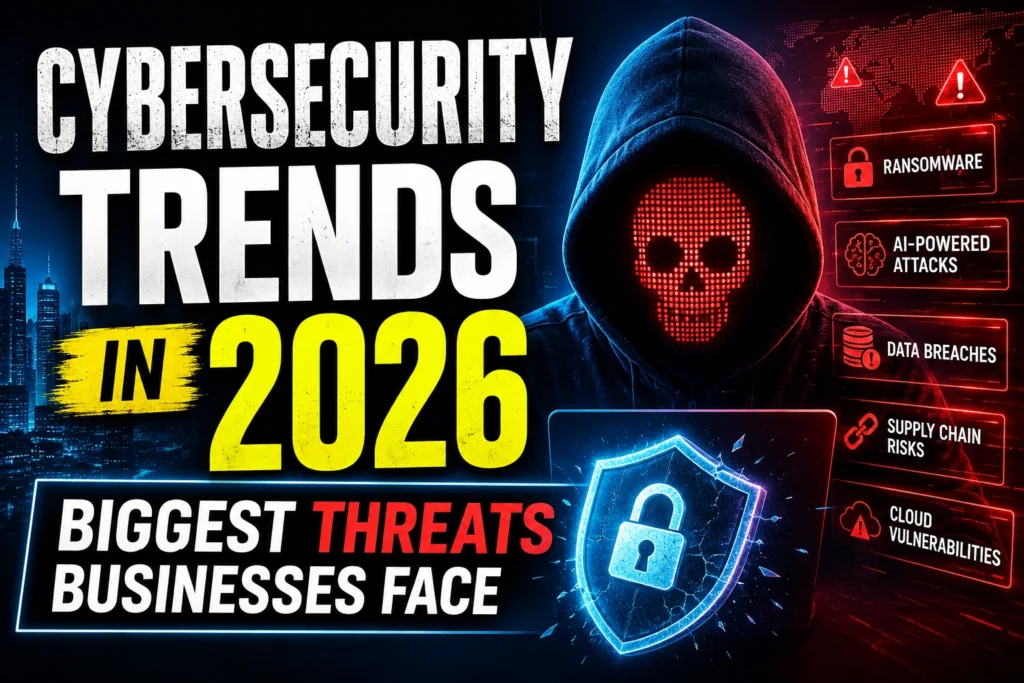
Cyberattacks are no longer a problem faced only by giant technology companies. In 2026, small businesses, startups, schools, hospitals, banks, and online stores are all becoming major targets for cybercriminals. That’s exactly why understanding the latest cybersecurity trends in 2026 has become essential not only for businesses but also for students planning careers in technology and cybersecurity. Think about it for a moment. Almost everything today runs online — banking, payments, shopping, cloud storage, AI tools, communication systems, and even classrooms. But as technology becomes smarter, cybercriminals are becoming smarter too. A few years ago, phishing emails and weak passwords were considered the biggest security concerns. Today, businesses are facing AI-powered cyberattacks, ransomware-as-a-service, deepfake scams, cloud security breaches, and attacks targeting remote workers.
- Introduction
- Why Cybersecurity Matters More Than Ever in 2026
- Cybersecurity Trends in 2026 Businesses Cannot Ignore
- Ransomware Attacks Are Evolving Rapidly
- Cloud Security Is Becoming a Top Priority
- Zero Trust Security Is Replacing Traditional Security Models
- Deepfake Technology Is Creating New Cyber Risks
- IoT Devices Are Expanding the Attack Surface
- Cybersecurity Skills Students Should Learn in 2026
- Threat Intelligence
- Digital Forensics
- Security Operations Center (SOC) Skills
- Cybersecurity Jobs in 2026
- Cybersecurity Certifications Worth Learning
- Top Cybersecurity Certifications in 2026
- How Businesses Can Stay Safe in 2026
- The Future of Cybersecurity Beyond 2026
- Conclusion
- FAQs
So what does the future of cybersecurity really look like?
In this detailed guide, you’ll learn about the biggest cybersecurity threats businesses face in 2026, the latest security trends shaping the industry, and the skills students should focus on if they want successful careers in cybersecurity. Cybersecurity is one of the fastest-growing technology sectors today. To explore other important innovations shaping the IT industry, read our article on Top 10 Emerging Technology Trends in 2026.
Why Cybersecurity Matters More Than Ever in 2026
The Digital World Is Expanding Rapidly
Every business today depends heavily on digital systems. Companies use cloud computing, AI tools, IoT devices, automation platforms, and remote work infrastructure to improve productivity and efficiency.
But there’s a major problem.
Every connected device creates another possible entry point for hackers.
A single weak password or unsecured employee laptop can expose an entire organization to cyberattacks. This is why cybersecurity is no longer optional — it has become a critical business survival strategy.
According to industry reports, global cybercrime damages are expected to cross trillions of dollars annually in the coming years. Businesses are now investing heavily in cybersecurity professionals, threat detection systems, and AI-powered defense technologies.
For students, this creates huge career opportunities in:
- Cybersecurity
- Ethical Hacking
- Digital Forensics
- SOC Analysis
- Cloud Security
- Threat Intelligence
Cybersecurity Trends in 2026 Businesses Cannot Ignore
AI-Powered Cyberattacks Are Becoming More Dangerous
Artificial Intelligence is helping businesses automate workflows and improve efficiency. Unfortunately, hackers are also using AI to launch more advanced attacks.
One of the biggest cybersecurity trends in 2026 is the rise of AI-driven cyberattacks. Cybercriminals can now use machine learning tools to:
- Create realistic phishing emails
- Crack passwords faster
- Automate malware attacks
- Generate fake voices and videos
- Bypass traditional security systems
Imagine receiving a video call from your manager asking for sensitive company information. The face, voice, and behavior appear completely real — but it is actually an AI-generated deepfake.
This is already happening.
Businesses now need advanced AI-based defense systems capable of identifying suspicious activity in real time.
Cybersecurity Skills Students Should Learn
Students entering cybersecurity should start learning:
- AI security fundamentals
- Threat intelligence
- Behavioral analytics
- Machine learning applications in cybersecurity
These skills will become extremely valuable in the coming years.
Ransomware Attacks Are Evolving Rapidly
Businesses Are Paying Millions to Recover Data
Ransomware remains one of the most damaging cyber threats in 2026.
In a ransomware attack, hackers encrypt company data and demand payment to unlock it. But modern ransomware attacks are becoming far more aggressive than before.
Today’s attackers often:
- Steal sensitive data before encryption
- Threaten to leak confidential information publicly
- Target hospitals, banks, and schools
- Attack supply chains
- Use subscription-based ransomware tools
This model is known as Ransomware-as-a-Service (RaaS). Even inexperienced hackers can now launch sophisticated attacks using ready-made ransomware kits.
How Businesses Are Fighting Ransomware
Organizations are protecting themselves through:
- Zero Trust Security
- Regular backups
- Multi-factor authentication
- Endpoint detection systems
- Employee awareness training
For students, ransomware defense is becoming a major specialization area within cybersecurity careers.
Cloud Security Is Becoming a Top Priority
Companies Are Moving Everything to the Cloud
Cloud computing is growing rapidly. Businesses now store massive amounts of sensitive information on platforms like:
- Google Cloud
- Microsoft Azure
- Amazon Web Services (AWS)
However, cloud adoption also introduces serious security risks.
A single configuration mistake can expose customer data, payment information, or confidential business records.
That’s why cloud security has become one of the most important cybersecurity trends in 2026.
High-Demand Cloud Security Careers
Companies are hiring professionals for roles such as:
- Cloud Security Engineer
- Cloud Compliance Analyst
- Security Architect
- DevSecOps Engineer
Essential Cloud Security Skills to Learn
Students interested in cybersecurity should learn:
- Cloud networking
- Identity and Access Management (IAM)
- Encryption
- Cloud compliance
- Security monitoring
Cloud security certifications are also becoming highly valuable worldwide.
Zero Trust Security Is Replacing Traditional Security Models
“Trust No One” Is the New Security Rule
Earlier, businesses assumed anyone inside the company network could be trusted automatically.
That approach no longer works.
In 2026, organizations are adopting the Zero Trust Security model. The idea is simple:
Never trust any user or device automatically.
Every employee, application, and device must continuously verify identity and authorization.
Key Components of Zero Trust Security
Zero Trust Security includes:
- Multi-factor authentication
- Device verification
- Access control policies
- Network segmentation
- Real-time monitoring
This security model helps prevent insider threats and remote-work vulnerabilities.
Because remote work continues growing globally, Zero Trust implementation is becoming essential for modern organizations.
Deepfake Technology Is Creating New Cyber Risks
Fake Videos and Voices Are Fooling Businesses
Deepfake attacks are among the fastest-growing cybersecurity threats in 2026.
Using AI tools, attackers can create highly realistic:
- Voice clones
- Fake video messages
- CEO impersonations
- Fraudulent customer support calls
In some cases, businesses have already lost millions due to fake executive voice calls requesting urgent money transfers.
Industries Most Affected by Deepfake Threats
Deepfake scams are creating major challenges for:
- Banks
- Financial institutions
- Government agencies
- Media companies
Businesses are now investing heavily in:
- AI-based identity verification
- Voice authentication systems
- Advanced fraud detection tools
Students entering cybersecurity should understand how social engineering attacks are evolving with AI technology.
IoT Devices Are Expanding the Attack Surface
Smart Devices Are Convenient but Vulnerable
Internet of Things (IoT) devices are everywhere today:
- Smart cameras
- Smart TVs
- Industrial sensors
- Wearable devices
- Smart home systems
The problem?
Many IoT devices still have weak security protections.
Hackers commonly exploit:
- Default passwords
- Outdated firmware
- Poor encryption
- Insecure APIs
Large businesses using connected industrial systems are especially vulnerable.
In 2026, IoT security professionals are in high demand because organizations need experts who can secure connected environments.
Cybersecurity Skills Students Should Learn in 2026
Technical Skills That Will Dominate the Industry
Cybersecurity is one of the fastest-growing career sectors globally. However, companies now want practical skills instead of just theoretical knowledge.
Here are the most valuable cybersecurity skills students should learn in 2026.
Ethical Hacking
Ethical hackers test systems for vulnerabilities before cybercriminals exploit them.
Popular Ethical Hacking Tools
- Kali Linux
- Metasploit
- Burp Suite
- Wireshark
Ethical hacking certifications remain highly respected worldwide.
Cloud Security
Cloud infrastructure security is becoming essential across industries.
Cloud Security Topics to Learn
- AWS Security
- Azure Security
- IAM policies
- Cloud threat detection
Cloud security experts often receive high-paying job offers globally.
Threat Intelligence
Threat intelligence involves analyzing cyber threats, attacker behavior, and malware trends.
This field combines:
- Research
- Data analysis
- Security monitoring
- Incident response
Businesses rely heavily on threat intelligence teams to prevent attacks before they happen.
Digital Forensics
Digital forensics experts investigate cybercrimes and analyze compromised systems.
Responsibilities Include
- Recovering deleted data
- Investigating breaches
- Malware analysis
- Evidence collection
This field is especially important in law enforcement and enterprise security.
Security Operations Center (SOC) Skills
SOC analysts monitor company systems 24/7 for suspicious activity.
Essential SOC Skills
Students should understand:
- SIEM tools
- Log monitoring
- Threat detection
- Incident response workflows
SOC jobs are becoming highly available worldwide.
Cybersecurity Jobs in 2026
Career Opportunities Are Growing Rapidly
One major reason students are exploring cybersecurity is the increasing job demand.
There is currently a global shortage of skilled cybersecurity professionals. Companies across industries are actively hiring.
Popular Cybersecurity Jobs in 2026
- Cybersecurity Analyst
- Ethical Hacker
- Penetration Tester
- Cloud Security Engineer
- SOC Analyst
- Incident Response Specialist
- Malware Researcher
- Security Consultant
Many of these careers offer:
- Remote work opportunities
- High salaries
- International career growth
- Flexible work environments
Even freshers with certifications and practical skills can land strong entry-level roles.
Cybersecurity Certifications Worth Learning
Certifications Can Improve Career Opportunities
Students often ask:
“Do cybersecurity certifications really matter?”
Yes — especially in cybersecurity.
Top Cybersecurity Certifications in 2026
Certified Ethical Hacker (CEH)
Excellent for beginners learning penetration testing and ethical hacking concepts.
CompTIA Security+
One of the best foundational certifications for students entering cybersecurity careers.
CISSP
A highly respected certification for experienced professionals and security managers.
Google Cybersecurity Certificate
Popular among beginners because of its practical learning modules.
AWS Security Certifications
Very useful for cloud security roles.
Certifications help validate practical skills and improve employability.
How Businesses Can Stay Safe in 2026
Practical Cybersecurity Strategies
Businesses can significantly reduce cyber risks by following strong security practices.
Employee Training
Human error remains one of the biggest causes of cyber breaches.
Regular training helps employees identify:
- Phishing scams
- Fake login pages
- Malicious links
- Social engineering attacks
Multi-Factor Authentication (MFA)
Adding an extra verification layer makes hacking accounts much harder.
MFA is now considered essential for all organizations.
Regular Software Updates
Outdated software creates vulnerabilities hackers can easily exploit.
Businesses should:
- Update systems regularly
- Patch vulnerabilities quickly
- Monitor third-party applications
Backup Critical Data
Secure backups help companies recover from ransomware attacks without paying criminals.
Continuous Monitoring
Modern cybersecurity requires real-time monitoring using AI-powered detection systems.
Businesses can identify suspicious behavior before serious damage occurs.
The Future of Cybersecurity Beyond 2026
Cybersecurity Will Continue Evolving
Technology never stands still.
As AI, quantum computing, blockchain, and automation continue growing, cybersecurity challenges will become even more complex.
Future Cybersecurity Trends May Include
- Quantum-resistant encryption
- AI-driven autonomous security systems
- Biometric authentication
- Decentralized identity protection
- Advanced cyber warfare prevention
For students, this means cybersecurity will remain one of the most future-proof career paths.
The learning never stops — and that is what makes the field exciting.
AI-powered attacks are growing rapidly because of advancements in autonomous systems. Learn more in our complete beginner guide on What Is Agentic AI?
Conclusion
Understanding the biggest cybersecurity trends in 2026 is essential for businesses, professionals, and students alike.
Cyber threats are becoming smarter, faster, and more automated. AI-powered attacks, ransomware, cloud vulnerabilities, deepfake scams, and IoT security risks are reshaping how companies protect their digital infrastructure.
At the same time, cybersecurity is creating incredible career opportunities worldwide. Businesses urgently need skilled professionals who can secure systems, detect threats, and respond to attacks effectively.
If you are a student exploring future careers, cybersecurity could become one of the best long-term industries to enter. The demand is growing globally, salaries are competitive, and new technologies are creating exciting opportunities every year.
The question is no longer:
“Will cybersecurity matter?”
The real question is:
“Are businesses prepared for what’s coming next?”
FAQs
What are the biggest cybersecurity threats in 2026?
The biggest cybersecurity threats in 2026 include AI-powered attacks, ransomware, cloud security breaches, deepfake scams, IoT vulnerabilities, and phishing attacks targeting businesses and remote workers.
Why is cybersecurity important for students in 2026?
Cybersecurity offers high-demand career opportunities, strong salaries, remote work options, and long-term industry growth. Students can build careers in ethical hacking, cloud security, SOC analysis, and digital forensics.
Which cybersecurity skill is most in demand in 2026?
Cloud security, ethical hacking, threat intelligence, AI security, and incident response are among the most in-demand cybersecurity skills globally.
What is Zero Trust Security?
Zero Trust Security is a cybersecurity model where no user or device is trusted automatically. Every access request must be verified continuously to reduce security risks.
Can AI improve cybersecurity?
Yes. AI helps businesses detect suspicious activity, automate threat detection, analyze attack patterns, and improve response times against cyber threats.