Introduction: The Announcement That Shook Silicon Valley
Let me start with a story that changed the AI world forever.
- Introduction: The Announcement That Shook Silicon Valley
- The Deal – What Actually Happened?
- The Context – A History of Frenemies
- Why Apple Chose Google Over OpenAI – 5 Key Reasons
- The OpenAI Fallout – From "King" to "Afterthought"
- The Winners – Who Benefits From This Deal?
- The Losers – Who Gets Hurt?
- What Elon Musk Said
- The Numbers – By the Digits
- What Happens Next?
- My Final Take – Was This a $100 Billion Mistake?
- Frequently Asked Questions
It was January 13, 2026. I was scrolling through my phone when the news hit: Apple and Google just signed a multi-year, deep AI partnership . Not Apple and OpenAI. Not Apple and Anthropic. Apple and Google – two companies that have been bitter rivals for nearly 20 years .
Here is what the joint statement said:
“Apple and Google have entered into a multi-year collaboration under which the next generation of Apple Foundation Models will be based on Google’s Gemini models and cloud technology. These models will help power future Apple Intelligence features, including a more personalized Siri coming this year.”
Let me translate that into simple English.
Apple is giving up on building its own AI. Instead, it is using Google’s Gemini to rebuild Siri and power Apple Intelligence. This is a massive deal. And it leaves one company completely out in the cold: OpenAI. Until this announcement, OpenAI’s ChatGPT was Apple’s main AI partner. Now, OpenAI has been pushed to the sidelines. From “default intelligence layer” to “optional feature” . In this blog, I will break down:
What this deal actually means
Why Apple chose Google over OpenAI (5 reasons)
What this means for the future of AI
Whether this was a mistake or a masterstroke
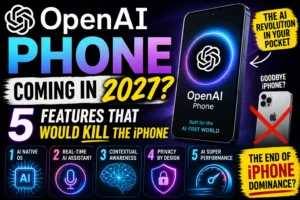
Apple’s reasoning made sense at the time. But OpenAI has since announced plans to build its own hardware. I have written about the 5 features of the rumored OpenAI phone that could actually make people switch from iPhone.
The Deal – What Actually Happened?
The Announcement Date
January 13, 2026 (US time)
The Key Terms
| Detail | Information |
|---|---|
| Partners | Apple and Google |
| Duration | Multi-year collaboration |
| What Apple Gets | Google’s Gemini models + cloud technology |
| What Google Gets | Access to Apple’s 2+ billion active devices |
| Estimated Value | ~$1 billion per year (reported) |
| Launch Timeline | iOS 26.4 (expected March-April 2026) |
What This Means for Siri
Remember how Siri has been… not great? That is about to change. With Gemini powering Siri behind the scenes, the new Siri will have:
Cross-app information integration – It will understand what’s on your screen, in your emails, and in your chats
True contextual understanding – It will actually remember what you talked about before
Conversational responses – It will stop saying “I don’t understand” and start actually helping
Proactive suggestions – It will suggest things before you even ask
The new Siri is expected to roll out in iOS 26.4 around March or April 2026 .
The Gemini Model Stats
Here is what Google is bringing to the table:
| Metric | Number |
|---|---|
| Gemini model parameters | 1.2 trillion |
| Apple’s previous model size | 150 billion |
| Difference | 8x larger |
That is a massive difference in capability. Google’s model is simply much more powerful.
The Context – A History of Frenemies
To understand why this deal is so shocking, you need to understand Apple and Google’s history.
The “Honeymoon” Era (2007-2009)
When Steve Jobs unveiled the first iPhone in 2007, Google was a close ally. Google Maps was a core iPhone feature. Google’s CEO Eric Schmidt sat on Apple’s board of directors . They were partners.
The “Thermonuclear War” Era (2010-2025)
Then everything changed.
Google launched Android. Steve Jobs was furious. He called Android a “stolen product” and vowed “thermonuclear war” against Google .For the next 15 years, Apple and Google fought on every front:
Smartphones (iPhone vs. Pixel)
Operating systems (iOS vs. Android)
App stores (App Store vs. Google Play)
Maps (Apple Maps vs. Google Maps)
Browsers (Safari vs. Chrome)
Voice assistants (Siri vs. Google Assistant)
They were bitter enemies.
The “Frenemy” Era (2026 and beyond)
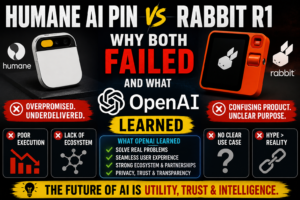
Now, they are partners again . Why? Because both companies need each other to survive the AI revolution. Sometimes, your enemy’s enemy is your friend. And for both Apple and Google, OpenAI became the common enemy . OpenAI’s hardware strategy is informed by the failures of companies like Humane and Rabbit. Understanding those failures helps explain why OpenAI might succeed where others failed.
Why Apple Chose Google Over OpenAI – 5 Key Reasons
Let me break down the real reasons behind this shocking decision.
Infrastructure – Google Has What Apple Needs
This is the most important reason.
OpenAI runs on Microsoft’s Azure cloud. They do not own their own data centers. They do not make their own AI chips .
Google, on the other hand, has:
Custom TPU chips (Tensor Processing Units) – designed specifically for AI
Global data centers – massive infrastructure built over 20+ years
Complete vertical integration – from chip to cloud to model
For a company like Apple, which serves over 2 billion active devices , this matters enormously .
When you need to process AI requests for hundreds of millions of iPhones every single day, you cannot rely on a company that is renting its computing power from someone else. You need reliability. You need speed. You need scale.
Google has all of that. OpenAI does not.
Costs – Google Can Do It Cheaper
This is related to reason #1.
Because Google owns its entire stack – chips, data centers, models – it can deliver AI services at a much lower cost.
One analyst put it this way: “For Apple, directly partnering with the company that has the underlying computing power is better for cost control and response speed than subcontracting through OpenAI to Microsoft Azure” .
In simple terms: Why pay OpenAI to rent Microsoft’s computers, when you can pay Google directly for their own computers?
The reported deal value is about $1 billion per year . That is expensive, but it buys Apple access to world-class AI without having to build it themselves.
OpenAI Became a Threat, Not a Partner
This is the most interesting reason.
Remember what I wrote in Cluster Blog 1 about OpenAI building its own hardware? About OpenAI hiring dozens of former Apple engineers? About OpenAI working with Jony Ive (Apple’s former design chief)?
Apple noticed .
Here is what one analysis said: “OpenAI is rapidly moving into hardware. As OpenAI begins to develop its own hardware devices and continues to poach Apple’s hardware design team (including former Apple design director Jony Ive’s new company), it is no longer just a pure software provider in Apple’s eyes. It is a potential, dangerous system-level competitor” .
Think about it from Apple’s perspective.
You are Apple. You invite OpenAI to be your AI partner. While working with you, OpenAI hires your former employees. OpenAI partners with your legendary former designer. OpenAI starts building a device that could compete with the iPhone.
Would you keep them as a partner?
Of course not. You would cut them out immediately.
That is exactly what Apple did.
Apple’s AI Development Failed
Let me be honest with you.
Apple tried to build its own AI. They failed.
Here is what happened:
The John Giannandrea Era
Apple hired John Giannandrea from Google in 2018 to fix Siri. He was supposed to be their AI savior. By late 2025, reports emerged that Giannandrea would retire in spring 2026 .
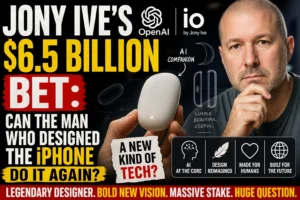
The irony is almost too perfect. Jony Ive, the man who made the iPhone beautiful, is now designing a device that could make the iPhone obsolete. I have explained his $6.5 billion bet with OpenAI in detail.
The Brain Drain
Apple’s AI team was “hollowed out” by competitors :
Ruoming Pang – former head of Apple’s Foundation Models team – was poached by Meta for a compensation package reportedly worth $200 million
Dozens of other AI engineers left for OpenAI and other competitors
The Missed Deadlines
Apple promised new AI features. They missed those promises. They reportedly faced a class-action lawsuit over AI features that never materialized .
Apple’s own AI chief, Craig Federighi, admitted to staff: “We initially wanted to do a hybrid architecture, but we realized that approach wasn’t going to get us to Apple quality” .
Translation: We tried. We failed. We need help.
Privacy – Apple’s Core Value
Here is something most people miss.
Apple cares deeply about privacy. That is not just marketing. It is a core business principle.
In this deal, Apple insisted on a specific architecture:
On-device processing for simple tasks (personal data stays on your phone)
Private Cloud Compute for complex tasks (Apple’s own servers, not Google’s)
The joint statement explicitly says: “Apple Intelligence will continue to run on Apple devices and Private Cloud Compute, while maintaining Apple’s industry-leading privacy standards” .
What does this mean?
Google will not have direct access to Apple user data. Apple is using Google’s model architecture, but Apple is running it on Apple’s infrastructure .
This is a clever solution. Apple gets Google’s AI brains without giving Google access to iPhone users’ private information.
The OpenAI Fallout – From “King” to “Afterthought”
Now let me talk about the biggest loser in this deal: OpenAI.
How It Used to Be
In 2024, Apple launched Apple Intelligence. OpenAI’s ChatGPT was their first and highest-profile partner .
When Siri couldn’t answer a question, it would ask: “Do you want me to use ChatGPT for this?”
ChatGPT was front and center. It was the default AI for iPhone users.
How It Is Now
After the Gemini deal, OpenAI’s role has been dramatically reduced.
Here is what analysts are saying:
“Apple’s decision to use Google’s Gemini models for Siri shifts OpenAI into a more supporting role, with ChatGPT remaining positioned for complex, opt-in queries rather than the default intelligence layer” – Parth Talsania, CEO of Equisights Research .
In simple English: OpenAI is no longer the default. ChatGPT is now just another option you can choose to use.
That is a massive demotion.
Sam Altman’s “Code Red”
Here is how badly OpenAI was caught off guard.
When Google announced Gemini 3 in late 2025, OpenAI CEO Sam Altman reportedly issued a “Code Red” to his teams. He ordered them to accelerate development immediately .
The Gemini deal with Apple was the result of that competitive pressure. Google had built a better model. Apple chose it. OpenAI got left behind.
The Winners – Who Benefits From This Deal?
This is Google’s biggest AI win since launching Google Search.
The Market Validation
Apple chose Google’s AI over OpenAI, Anthropic, and Perplexity. That is a massive vote of confidence .
The Distribution
Apple has over 2 billion active devices . Starting in 2026, many of those devices will be running Google’s Gemini technology.
That is hundreds of millions of people using Google’s AI every single day – people who might have been using ChatGPT instead.
The Stock Price
The announcement sent Google’s market valuation above $4 trillion for the first time ever . Investors loved the news.
Apple
Apple finally gets a competitive AI assistant.
For years, Siri has been a joke compared to Google Assistant and Alexa. Now, with Gemini powering it, Siri might actually become useful .
And Apple gets this without spending billions on building its own AI models. They are essentially renting Google’s AI expertise while keeping their privacy promises intact .
Consumers
If you own an iPhone, you win.
The new Siri will be smarter, faster, and more useful. Cross-app understanding means it will actually help you get things done .
And because Apple is running the AI on its own private cloud, your data stays private.
The Losers – Who Gets Hurt?
OpenAI
This is obvious. OpenAI lost access to 1.5 billion iPhone users .
ChatGPT is still available on iPhones. But it is no longer the default. It is an afterthought.
This is particularly painful because OpenAI was planning to compete with Apple. Now, Apple has partnered with OpenAI’s biggest competitor .
Microsoft
Remember, OpenAI runs on Microsoft’s Azure cloud. Microsoft has invested billions in OpenAI.
If OpenAI loses relevance, Microsoft loses too.
Other AI Startups
Anthropic, Perplexity, and other AI companies were also reportedly considered for this partnership . They lost out to Google. That means less distribution, less funding, and less attention.
What Elon Musk Said
Elon Musk – who runs Tesla, xAI, and formerly Twitter – had strong opinions about this deal.
He posted on X (formerly Twitter):
“This seems like an unreasonable concentration of power for Google, given that (they) also have Android and Chrome” .
Musk has his own AI company, xAI. He is trying to compete with OpenAI and Google. So his criticism is not neutral.
But his point is worth considering: Is it healthy for one company (Google) to control both Android AND the AI running on iPhones?
Regulators might ask that question in the coming years.
The Numbers – By the Digits
Let me give you all the key numbers in one place.
| Metric | Number |
|---|---|
| Apple active devices | 2+ billion |
| iPhone users | ~1.5 billion |
| Gemini model parameters | 1.2 trillion |
| Apple’s previous model size | 150 billion |
| Reported deal value | ~$1 billion per year |
| Google’s market cap after deal | $4+ trillion |
| Apple’s AI VP departure | John Giannandrea (retired spring 2026) |
| Meta’s offer to Ruoming Pang | $200 million |
| iOS version with new Siri | iOS 26.4 (March-April 2026) |
What Happens Next?
The Short Term (2026)
March-April 2026: iOS 26.4 releases with the new Gemini-powered Siri
June 2026: Apple’s WWDC will likely showcase more AI features built on Gemini
OpenAI scrambling: Expect OpenAI to accelerate its hardware plans with Jony Ive
The Long Term (2027-2028)
OpenAI phone rumors: If OpenAI launches its own hardware, it will now compete directly with Apple
Apple’s own models: Apple is not giving up on AI. They may still try to build their own models while using Gemini as a bridge
Regulatory scrutiny: Antitrust regulators might question Google’s growing power
My Final Take – Was This a $100 Billion Mistake?
Here is my honest opinion.
For Apple: This was the smartest move they could make. Their own AI development failed. They needed a partner. Google had the best technology and the best infrastructure. The $1 billion per year price tag is worth it to finally have a competitive Siri .
For Google: This was a masterstroke. They turned a bitter rival into a paying customer. They get distribution to billions of devices. And they proved that their AI is now better than OpenAI’s .
For OpenAI: This was a devastating loss. They went from being Apple’s AI partner to being an afterthought. Their only path forward is to build their own hardware and compete directly with Apple.
For consumers: We win. A better Siri is coming. Competition between Google, OpenAI, and Apple will drive innovation.
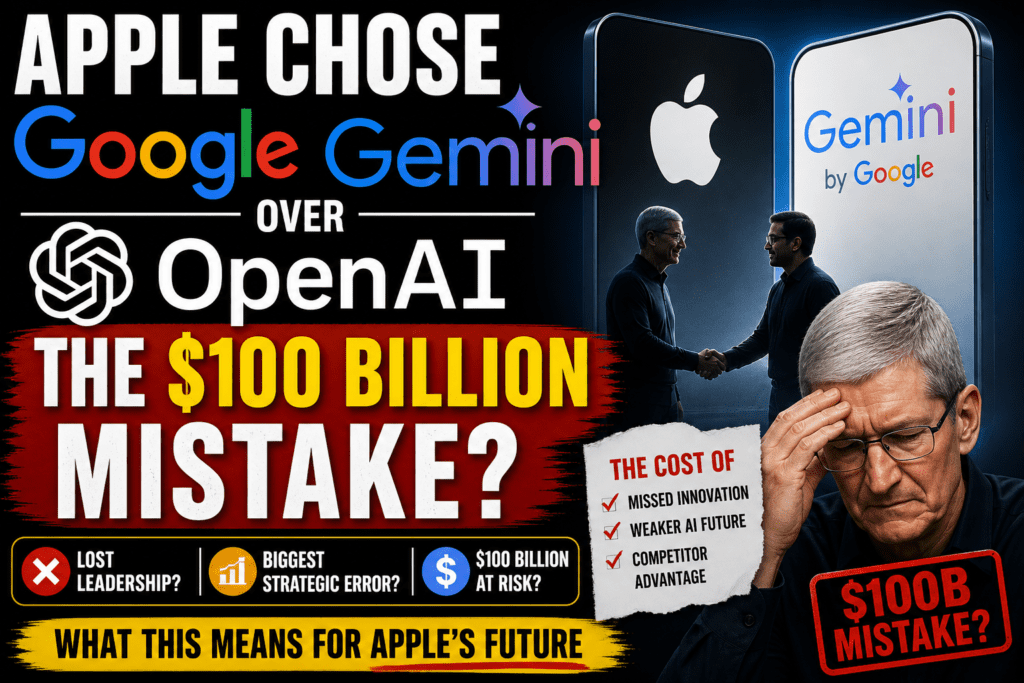
Was this a $100 billion mistake? Not for Apple. Not for Google.
But for OpenAI? Yes. Losing access to 1.5 billion iPhone users is a mistake they will feel for years.
Frequently Asked Questions
Q1: Is OpenAI completely removed from Apple devices?
A: No. ChatGPT is still available. But it is no longer the default AI .
Q2: When will the new Siri launch?
A: Expected in iOS 26.4, around March-April 2026 .
Q3: Will Google have access to my iPhone data?
A: No. Apple is running Google’s models on Apple’s private cloud. Google does not get direct data access .
Q4: How much is Apple paying Google?
A: Reports suggest around $1 billion per year, but the exact terms were not disclosed .
Q5: Is Apple giving up on its own AI?
A: No. This is a partnership, not a replacement. Apple continues to work on its own models .