Introduction
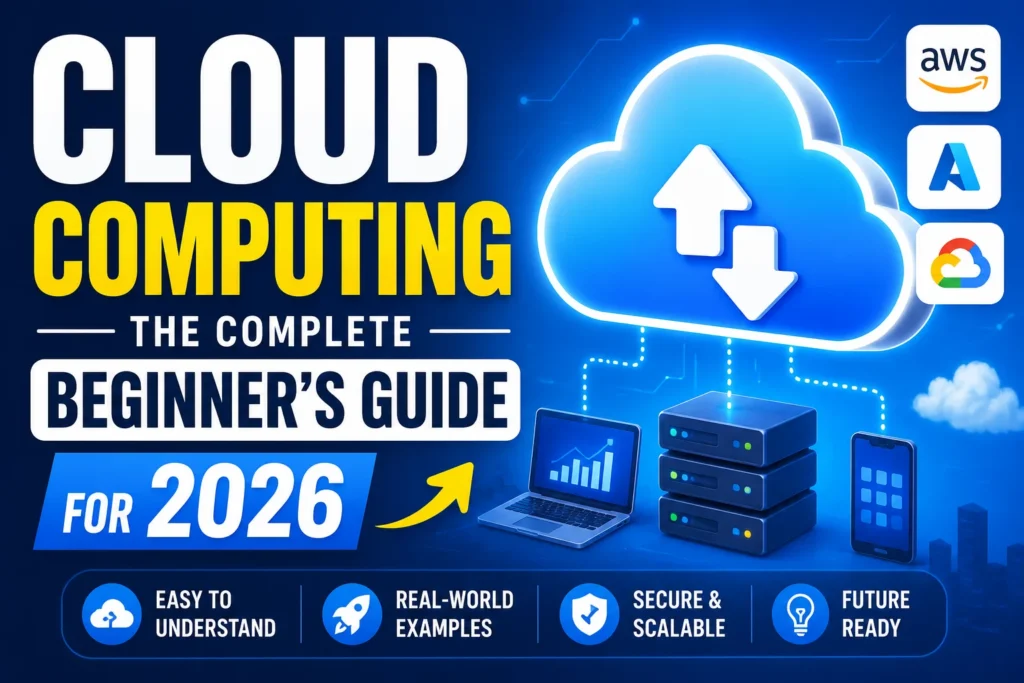
Cloud Computing is the delivery of computing services like storage, servers, databases, networking, software, and AI tools over the internet instead of relying on local systems. In 2026, businesses use cloud platforms to reduce infrastructure costs, improve scalability, support AI workloads, and build faster digital products. From startups to global enterprises, cloud technology has become the foundation of modern digital transformation. Explore The future of cloud systems is deeply connected to broader innovations discussed in Top 10 Emerging Technology Trends in 2026.
- Introduction
- What Is Cloud Computing?
- Simple Definition
- Why Cloud Computing Became Essential in 2026
- Types of Cloud Computing Models
- Cloud Computing Service Models Explained
- Infrastructure as a Service (IaaS)
- Platform as a Service (PaaS)
- Software as a Service (SaaS)
- Cloud Infrastructure in 2026
- Cloud Security: Biggest Priority in 2026
- Modern Cloud Security Best Practices
- Cloud Migration Explained for Beginners
- Common Migration Approaches
- Cloud Migration Workflow
- Serverless Computing: The Fastest Growing Cloud Model
- Benefits of Serverless Computing
- Kubernetes Deployment and Cloud Native Applications
- Edge Computing and the Future of Real-Time Processing
- Cloud Cost Optimization Strategies
- Latest Cloud Computing Trends in 2026
- Top Cloud Computing Trends 2026
- Best Cloud Computing Platforms in 2026
- Real-World Cloud Computing Use Cases
- Cloud Computing vs Traditional Infrastructure
- Future of Cloud Computing Beyond 2026
- FAQs
- Conclusion
Today, cloud platforms power AI applications, streaming services, online banking, eCommerce systems, remote work tools, healthcare systems, and smart devices. The rapid growth of AI in cloud computing is also changing how businesses automate workflows, analyze data, and deploy applications at scale.
What Is Cloud Computing?
Cloud Computing allows users to access computing resources on demand through the internet. Instead of buying expensive physical hardware, companies rent infrastructure and services from cloud providers.
Simple Definition
Cloud Computing means using online servers and services to store data, run applications, and manage computing tasks remotely.
Common Cloud Services Include:
- Data storage
- Virtual servers
- AI and machine learning tools
- Databases
- Application hosting
- Security services
- Backup systems
- Networking tools
Major cloud providers in 2026 include:
- Amazon Web Services (AWS)
- Microsoft Azure
- Google Cloud Platform
- Oracle Cloud
- IBM Cloud
These providers now offer integrated AI infrastructure optimized for generative AI, automation, and enterprise analytics.
Why Cloud Computing Became Essential in 2026
Businesses are moving away from traditional infrastructure because modern digital operations require speed, flexibility, and intelligent automation.
Key Reasons Behind Cloud Adoption
1. Scalability
Cloud platforms allow companies to instantly increase or decrease computing resources based on traffic and demand.
Example:
An eCommerce website can automatically scale servers during festive sales without purchasing permanent hardware.
2. Cost Reduction
Organizations reduce capital expenses because they no longer need to maintain large physical data centers.
3. AI Integration
AI in Cloud Computing is now one of the biggest technology shifts. Cloud providers offer ready-to-use AI models, GPU infrastructure, automation tools, and AI agents.
4. Faster Innovation
Cloud-native development helps businesses launch products quickly using APIs, containers, and automation pipelines.
5. Remote Accessibility
Teams can securely access systems from anywhere, supporting hybrid work environments.
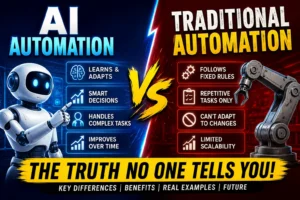
Businesses implementing intelligent automation are also combining cloud systems with AI workflows. Many enterprises now integrate cloud platforms with automation strategies discussed in AI Automation vs Traditional Automation.
Types of Cloud Computing Models
Understanding cloud deployment models is important for beginners.
Public Cloud
A third-party provider manages infrastructure and services over the internet.
Best For:
- Startups
- Small businesses
- SaaS applications
- AI experimentation
Benefits:
- Lower costs
- Fast deployment
- Easy scaling
Example providers:
- AWS
- Azure
- Google Cloud
Private Cloud
Private cloud infrastructure is dedicated to one organization.
Best For:
- Banks
- Healthcare companies
- Government organizations
Advantages:
- Better control
- Higher security
- Compliance management
Hybrid Cloud
Hybrid Cloud combines private infrastructure with public cloud environments.
This is one of the fastest-growing cloud computing services in 2026 because businesses want both flexibility and security.
Example:
A healthcare company stores sensitive patient records in a private cloud while running analytics in a public cloud.
Benefits:
- Flexible workloads
- Improved compliance
- Better disaster recovery
Multi Cloud Strategy
A Multi Cloud Strategy means using multiple cloud providers simultaneously.
Why Companies Use Multi Cloud:
- Avoid vendor lock-in
- Improve reliability
- Optimize pricing
- Access specialized services
Example:
A company may use AWS for storage, Azure for enterprise applications, and Google Cloud for AI processing.
Cloud Computing Service Models Explained
Cloud platforms mainly offer three service categories.
| Service Model | Meaning | Example Use |
|---|---|---|
| IaaS | Infrastructure as a Service | Virtual servers and storage |
| PaaS | Platform as a Service | App development environments |
| SaaS | Software as a Service | Gmail, Microsoft 365, Zoom |
Infrastructure as a Service (IaaS)
IaaS provides virtualized cloud infrastructure.
Includes:
- Virtual machines
- Networking
- Storage
- Load balancers
Best For:
- Developers
- IT teams
- Large applications
Cloud infrastructure services are heavily used for AI model training in 2026.
Platform as a Service (PaaS)
PaaS helps developers build applications without managing hardware.
Benefits:
- Faster development
- Automated deployment
- Built-in scaling
Popular tools:
- Google App Engine
- Azure App Services
- Heroku
Software as a Service (SaaS)
SaaS applications run entirely through the browser.
Examples:
- Slack
- Notion
- Canva
- Salesforce
SaaS platforms dominate modern business operations because they eliminate installation complexity. The rapid growth of AI-powered infrastructure is strongly connected to innovations explained in AI Automation vs Traditional Automation.
Cloud Infrastructure in 2026
Cloud Infrastructure now includes AI-optimized systems, distributed computing networks, and edge processing environments.
Main Components
Compute Resources
Virtual servers, GPUs, CPUs, and AI accelerators.
Networking
Secure internet communication between systems and applications.
Storage
Cloud storage solutions allow businesses to store massive amounts of data globally.
Security Layers
Modern cloud infrastructure includes identity management, encryption, and zero-trust frameworks.
Organizations focusing on modern cybersecurity models often combine cloud security with Zero Trust Security Model Explained strategies.
Cloud Security: Biggest Priority in 2026
Cloud Security has become a top concern because businesses manage sensitive data across distributed systems.
Major Cloud Security Risks
- Data breaches
- Misconfigured storage
- API vulnerabilities
- Insider threats
- AI-powered cyberattacks
Modern Cloud Security Best Practices
Zero Trust Security
Every request must be verified before access is granted.
Identity and Access Management (IAM)
Controls user permissions and authentication.
AI Threat Detection
Cloud platforms now use AI to detect suspicious activity in real time.
Data Encryption
Sensitive data remains encrypted during storage and transfer.
Continuous Monitoring
Security systems monitor workloads 24/7.
Cloud providers now include built-in AI-driven threat intelligence tools to reduce attack response time.
Cloud Migration Explained for Beginners
Cloud Migration means moving applications, databases, and infrastructure from on-premise systems to cloud environments.
Common Migration Approaches
| Strategy | Meaning |
| Rehosting | Move applications without major changes |
| Replatforming | Make small cloud optimizations |
| Refactoring | Rebuild applications for cloud-native performance |
Cloud Migration Workflow
Step 1: Assessment
Analyze applications and infrastructure.
Step 2: Planning
Choose cloud providers and migration methods.
Step 3: Migration
Transfer workloads securely.
Step 4: Optimization
Improve performance and reduce costs.
Step 5: Monitoring
Track application health and security.
Businesses migrating legacy systems often combine cloud transformation with digital modernization initiatives similar to trends covered in Top Emerging Technology Trends in 2026.
Serverless Computing: The Fastest Growing Cloud Model
Serverless Computing allows developers to run code without managing servers.
How It Works
The cloud provider automatically handles:
- Infrastructure
- Scaling
- Maintenance
- Resource allocation
Developers only focus on writing application code.
Benefits of Serverless Computing
Lower Costs
Pay only for actual usage.
Faster Development
No server management required.
Automatic Scaling
Applications handle traffic spikes instantly.
Better Productivity
Teams focus more on innovation.
Popular serverless platforms:
- AWS Lambda
- Google Cloud Functions
- Azure Functions
Serverless architecture is becoming essential for AI applications and event-driven systems.
Kubernetes Deployment and Cloud Native Applications
Modern applications are increasingly built using containers and Kubernetes deployment systems.
What Are Cloud Native Applications?
Cloud-native applications are designed specifically for cloud environments.
Features:
- Microservices architecture
- Containers
- API-first systems
- Automated scaling
Why Kubernetes Matters
Kubernetes manages containers automatically.
Benefits:
- Auto-scaling
- Self-healing systems
- Better resource usage
- Faster deployment cycles
Large AI applications and SaaS platforms now rely heavily on Kubernetes clusters for workload management.
Edge Computing and the Future of Real-Time Processing
Edge Computing processes data closer to the source instead of sending everything to centralized cloud servers.
Why Edge Computing Is Growing
AI systems require faster processing for:
- Autonomous vehicles
- Smart factories
- Healthcare monitoring
- IoT devices
- Retail automation
Benefits of Edge Computing
Lower Latency
Faster response times.
Reduced Bandwidth Costs
Less data travels to central cloud servers.
Real-Time Analytics
Important for AI decision-making systems.
Edge computing is expected to become a major part of cloud computing trends 2026.
Cloud Cost Optimization Strategies
Many businesses overspend on cloud services due to poor resource management.
Common Cost Optimization Methods
Auto Scaling
Resources increase only when needed.
Reserved Instances
Long-term cloud usage discounts.
Storage Tiering
Move rarely used data to cheaper storage.
AI Cost Monitoring
AI tools now automatically detect wasteful spending.
Container Optimization
Kubernetes improves infrastructure efficiency.
Cloud cost optimization has become a critical business priority because AI workloads require significant GPU resources.
Latest Cloud Computing Trends in 2026
The cloud industry is evolving rapidly due to AI and distributed infrastructure innovations.
Top Cloud Computing Trends 2026
AI-Native Cloud Platforms
Cloud providers now offer built-in AI agents and automation systems.
Green Cloud Infrastructure
Sustainable data centers using renewable energy are expanding.
GPU-as-a-Service
Businesses rent high-performance AI GPUs instantly.
Industry-Specific Clouds
Healthcare, finance, and retail clouds are becoming more specialized.
Autonomous Cloud Operations
AI systems automatically manage infrastructure performance and security.
Quantum-Ready Cloud Systems
Major providers are preparing for quantum computing integration.
Edge AI Expansion
AI processing increasingly happens near devices instead of centralized servers. These innovations are closely connected to broader digital transformation movements shaping global technology ecosystems. Organizations focusing on modern cybersecurity models often combine cloud security with Zero Trust Security Model Explained strategies.
Best Cloud Computing Platforms in 2026
Amazon Web Services (AWS)
Strengths:
- Largest cloud ecosystem
- Advanced AI services
- Strong developer tools
Best for:
- Enterprises
- Startups
- AI applications
Microsoft Azure
Strengths:
- Enterprise integrations
- Hybrid cloud support
- Strong security tools
Best for:
- Corporate businesses
- Microsoft ecosystem users
Google Cloud Platform (GCP)
Strengths:
- AI and machine learning
- Data analytics
- Kubernetes leadership
Best for:
- AI startups
- Analytics platforms
Oracle Cloud
Strengths:
- Database optimization
- Enterprise performance
Best for:
- Large enterprise databases
Real-World Cloud Computing Use Cases
Healthcare
Hospitals use cloud systems for:
- Patient records
- AI diagnostics
- Remote monitoring
Banking
Banks use cloud infrastructure for:
- Fraud detection
- Mobile banking
- Real-time analytics
Retail
Retail companies use cloud services for:
- Personalized recommendations
- Inventory automation
- Customer analytics
Education
Educational platforms use cloud computing for:
- Online learning
- Virtual classrooms
- AI tutors
Entertainment
Streaming companies use cloud platforms for:
- Video delivery
- Recommendation engines
- Global scalability
Cloud Computing vs Traditional Infrastructure
| Feature | Cloud Computing | Traditional Infrastructure |
| Setup Speed | Fast | Slow |
| Scalability | Automatic | Limited |
| Cost Model | Pay-as-you-go | High upfront investment |
| Maintenance | Provider-managed | In-house management |
| AI Integration | Easy | Complex |
| Flexibility | High | Low |
| Remote Access | Excellent | Limited |
Future of Cloud Computing Beyond 2026
Cloud Computing is moving toward highly intelligent, autonomous, and distributed systems.
Future Predictions
AI Will Manage Infrastructure
Autonomous AI agents will optimize cloud operations automatically.
Edge + Cloud Integration Will Expand
Real-time applications will combine edge processing with centralized AI systems.
Quantum Cloud Services Will Emerge
Cloud providers are investing heavily in quantum computing infrastructure.
Cloud Security Will Become AI-Driven
AI-powered cyber defense systems will dominate enterprise security.
Smaller Businesses Will Adopt Enterprise-Level AI
Cloud democratization will make advanced AI accessible to startups and creators.
The future of cloud systems is deeply connected to broader innovations discussed in Top 10 Emerging Technology Trends in 2026.
FAQs
What is Cloud Computing in simple words?
Cloud Computing means using internet-based servers and services instead of local computers or physical hardware.
What are the main types of cloud computing?
The main types are:
- Public cloud
- Private cloud
- Hybrid cloud
- Multi cloud
Why is cloud computing important in 2026?
Cloud computing supports AI applications, remote work, automation, scalable infrastructure, and modern digital services.
What is serverless computing?
Serverless computing allows developers to run applications without managing servers manually.
Which cloud platform is best for beginners?
AWS, Microsoft Azure, and Google Cloud Platform are beginner-friendly and offer free learning resources.
Is cloud computing secure?
Yes, modern cloud security includes encryption, AI threat detection, identity management, and zero-trust frameworks.
What is the difference between cloud and traditional infrastructure?
Cloud systems provide flexible, scalable, internet-based infrastructure while traditional systems rely on physical hardware.
How does AI improve cloud computing?
AI improves:
- Automation
- Threat detection
- Cost optimization
- Analytics
- Infrastructure management
Conclusion
Cloud Computing has become the backbone of modern digital transformation in 2026. Businesses now rely on cloud infrastructure for scalability, AI integration, automation, cybersecurity, and real-time services. Technologies like hybrid cloud, serverless computing, Kubernetes deployment, and edge computing are reshaping how applications are built and managed. For beginners, understanding cloud computing is no longer optional. Whether you are a developer, business owner, marketer, startup founder, or student, cloud technology will play a major role in future digital workflows. As AI continues to evolve, cloud platforms will become even smarter, faster, and more autonomous. Companies that adapt early will gain significant advantages in innovation, efficiency, and long-term growth.